How EDI is Transforming Healthcare: A Deep Dive into Modern Data Management

As the healthcare system becomes increasingly fast-paced, seamless and precise data exchange is no longer a luxury, but a pressing need. The future of healthcare is changing with Electronic Data Interchange (EDI). Automating data sharing and eliminate manual processes EDI has become a driving force in healthcare, leading to efficiency, accuracy & compliance. Now, let us see how EDI is transforming healthcare and why it’s vital for modern data management?
What is EDI in Healthcare?
Electronic Data Interchange basically represents an electronic exchange of standardized business messages between the institutions. For instance, in healthcare, EDI ensures effective communication between the providers, payers, pharmacies and others. EDI standardizes data formats, which means that sensitive information—like claims, eligibility verifications, and payment remittances—can flow smoothly and without error.
Why EDI matters in healthcare?
Data is the lifeblood of the healthcare industry. Manual management of patient records, insurance claims, and treatment plans is both laborious and error-prone. EDI intersects these challenges by:
- Improving Efficiency: Automating routine tasks reduces administrative burdens and allows staff to focus on patient care.
- Enhancing Accuracy: Standardized formats minimize errors associated with manual data entry.
- Ensuring Compliance: EDI systems are designed to meet regulatory requirements, such as HIPAA (Health Insurance Portability and Accountability Act).
- Reducing Costs: By eliminating paper-based processes, organizations can save on materials, storage, and labor costs.
EDI in Healthcare: Key Benefits
- Streamlined Claims Processing: EDI automates the process of submitting and processing claims for insurance, thus minimizing the time it takes to get approvals and reimbursements.
- Better Patient Experience: Rapid verification of eligibilities and pre-authorizations help switch to service delivery, improving patient experience.
- Data Security and Compliance: To make sure sensitive patient data is safe and secure, EDI techniques come with robust encryption protocols in order to remain complaint with appropriate policies.
- Interoperability: EDI allows for secure, standardized communication between disparate healthcare systems, promoting collaboration between providers, payers, and other stakeholders.
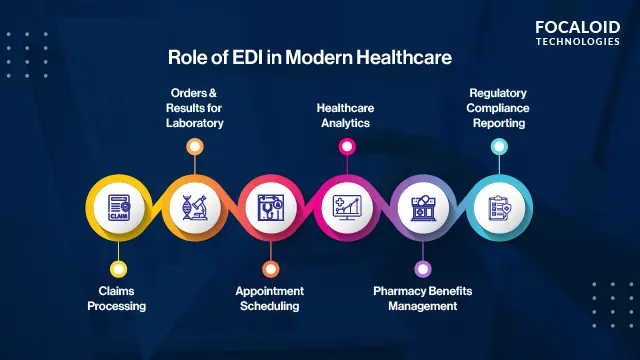
The Transformative Effects of EDI on the Modern Healthcare Industry
- Automation of Administrative Processes
Healthcare organizations are leveraging EDI to automate repetitive administrative tasks such as claim submissions, patient eligibility checks, and appointment scheduling. This not only saves time but also reduces the risk of human error, allowing staff to focus on more critical aspects of patient care.
- Enhanced Data Accuracy and Speed
With EDI, healthcare providers can send and receive accurate information in real-time. This speed and precision are crucial in scenarios like emergency care, where timely access to patient information can make a life-saving difference.
- Cost Savings
EDI helps to cut operational costs through the elimination of paper forms and manual data entry Industry estimates states that EDI users save around 35% on administrative costs.
- Regulatory Compliance
Regulatory frameworks like HIPAA require that patient data is properly handled and stored. EDI systems are structured to adhere to such standards so that healthcare organizations can avoid penalties and maintain the confidence of the stakeholders.
- Interoperability and Collaboration
EDI serves as a link between isolated systems and facilitates data transmission between those in the healthcare ecosystem. This degree of interoperability is essential for coordinated care and improved patient outcomes.
Real-World Use Cases of EDI in Healthcare
Use Case 1: Accelerating Claims Processing
A leading hospital network in the USA adopted EDI to streamline its claims processing. By automating claim submissions and reducing manual interventions, the network:
- Reduced claim processing time by 40%.
- Minimized errors in claim submissions, leading to a 25% increase in first-pass acceptance rates.
- Enhanced cash flow by ensuring quicker reimbursements from payers.
Use Case 2: Improving Patient Eligibility Verification
A multi-specialty clinic implemented EDI to handle patient eligibility verifications. The system allowed the clinic to:
- Instantly verify insurance coverage during patient check-in.
- Reduce waiting times by 30%, leading to improved patient satisfaction.
- Ensure accurate billing, eliminating revenue losses due to incorrect eligibility information.
Challenges in Implementing EDI
While EDI offers numerous benefits, its implementation comes with challenges such as:
- Initial Setup Costs: Deploying an EDI system requires a significant upfront investment.
- Complexity of Integration: Integrating EDI with existing systems can be complex, requiring technical expertise.
- Data Standardization: Ensuring that all stakeholders adhere to standardized data formats is essential for EDI’s success.
The Future of EDI in Healthcare
As the healthcare industry continues to embrace digital transformation, the role of EDI is set to expand. Emerging technologies like artificial intelligence (AI) and blockchain are expected to enhance EDI systems, making them more intelligent and secure. AI-powered analytics can provide actionable insights from EDI data, while blockchain can further strengthen data security and transparency.
Conclusion
EDI in healthcare is not just a data exchange tool, it’s a transformational catalyst. Overall, EDI is playing a critical role in enabling healthcare organizations to provide better care at lower costs by automating processes, improving accuracy, and fostering collaboration. What once was merely a means to an end for healthcare has, with the advancement of technology, now evolved into a fundamental element of modern healthcare data management, and will continue to be for years to come. If your organization has yet to embrace EDI, now is the time to consider it. Revolutionize your healthcare operations and thrive in this ever-evolving sector. Let’s connect to explore more.
Related Posts

Your Cloud Bill Isn't a Scaling Problem. It's an Architecture Problem.

AI Workflow Automation for Cloud Operations at Scale and Security